Hiking Through Puebla’s Hidden Architectural Wonders – You Won’t Believe What’s on the Trail
You know that feeling when you're hiking and suddenly, out of nowhere, you stumble upon something absolutely stunning? That’s exactly what happened in Puebla. I went for the mountain views, but ended up discovering breathtaking architecture tucked in the most unexpected places. Colonial charm meets rugged trails here—where cobblestone paths lead to centuries-old chapels and hilltop monasteries blend into the mist. This isn’t just a hike; it’s a journey through time and design. The air is crisp, the scent of pine lingers, and then, as if conjured from history itself, a Baroque dome rises above the treeline. In Puebla, nature and heritage are not separate realms—they are woven together, waiting to be uncovered one step at a time.
Why Puebla is a Hiker’s Secret Playground
Puebla, nestled in the highlands of central Mexico, offers one of the most diverse and underappreciated hiking landscapes in the country. While many travelers focus on its UNESCO-listed historic center, few realize that just beyond the city limits lies a network of trails winding through mountains, canyons, and volcanic foothills. The region is framed by the majestic Popocatépetl and Iztaccíhuatl volcanoes, their snow-capped peaks often visible on clear mornings. But the real magic happens at mid-elevation, where trails range from gentle forest paths to more challenging ascents through oak and pine woodlands. These routes offer not only fresh air and physical invigoration but also a rare convergence of natural beauty and architectural legacy.
What makes Puebla particularly ideal for hiking is its climate. Thanks to its elevation—averaging around 2,100 meters (6,900 feet) above sea level—the region enjoys mild temperatures year-round. Summers are temperate, rarely becoming overly hot, while winters are cool but seldom freezing, making outdoor exploration comfortable in every season. The dry season, stretching from November to April, provides the clearest skies and safest trail conditions, with minimal risk of mudslides or trail erosion. This stable weather pattern allows hikers to plan excursions with confidence, knowing that visibility will likely reward them with sweeping views of the surrounding valleys and distant peaks.
Yet the most surprising aspect of hiking in Puebla is how seamlessly the natural environment transitions into zones of profound historical significance. One moment you’re navigating a rocky path through agave-dotted slopes, and the next, you’re stepping onto cobblestones laid centuries ago. These transitions are not accidental. For generations, religious and civic structures were built along elevated routes, both for spiritual symbolism and practical defense. As a result, many trails lead not just to scenic overlooks but to architectural treasures—chapels, monasteries, and watchtowers—placed deliberately to dominate the landscape. This blending of terrain and tradition gives Puebla’s hikes a dimension rarely found elsewhere: every ascent becomes a passage through layers of culture and time.
The Architectural Pulse of Puebla: More Than Just a Pretty Facade
To understand why Puebla’s trails are dotted with architectural wonders, one must first appreciate the city’s deep-rooted heritage. Puebla de los Ángeles was founded in 1531 with a carefully planned grid layout, designed to reflect both Spanish urban ideals and the spiritual aspirations of the colonial era. Its historic center, now a UNESCO World Heritage Site, is renowned for its ornate churches, colorful Talavera tilework, and harmonious blend of European and indigenous design. But this architectural richness does not stop at the city limits. The same forces that shaped Puebla’s core—religion, trade, and territorial expansion—extended outward, influencing the construction of religious and civic buildings in surrounding highland communities.
What sets Puebla apart is the unique fusion of architectural styles that emerged over centuries. Spanish colonial design brought grid patterns, central plazas, and grand facades, but local artisans infused these structures with indigenous craftsmanship and Mesoamerican symbolism. This synthesis is particularly evident in the region’s religious buildings, where Baroque extravagance meets native materials and motifs. Stone carvings depict local flora alongside Christian iconography; domes are tiled in patterns reminiscent of pre-Hispanic geometry. Even outside the city, in remote hillside villages, this blend persists—visible in the stonework of bell towers, the layout of cloisters, and the intricate tile borders framing arched doorways.
One of the most compelling reasons for the concentration of architectural sites along hiking trails is their original purpose. Many chapels and monasteries were built on elevated ground not only for spiritual symbolism—being closer to the heavens—but also for strategic oversight. Perched on ridgelines or hilltops, these structures served as waypoints for pilgrims, sentinels for early warning systems, and centers of community life. Their placement ensured visibility from afar and accessibility to travelers on foot. Today, these same locations make for compelling hiking destinations, where the journey itself becomes part of the experience. Reaching a hilltop monastery is not just about the view—it’s about understanding how faith, function, and form once shaped the landscape.
Trail to the Chapel: Hiking Up to Capilla del Rosario
One of the most rewarding hikes in the region leads to the Capilla del Rosario, a lesser-known but exquisitely preserved 17th-century chapel nestled in the hills northeast of Puebla city. The trail begins in a quiet neighborhood on the outskirts, where paved streets gradually give way to compacted earth and tree-lined paths. As elevation increases, the air grows cooler and the scent of pine and eucalyptus fills the breeze. The hike is moderate in difficulty, covering about 4.5 kilometers round trip with a steady but manageable incline. Along the way, hikers pass through small groves of oyamel fir and catch glimpses of the city below, its rooftops fading into a soft haze.
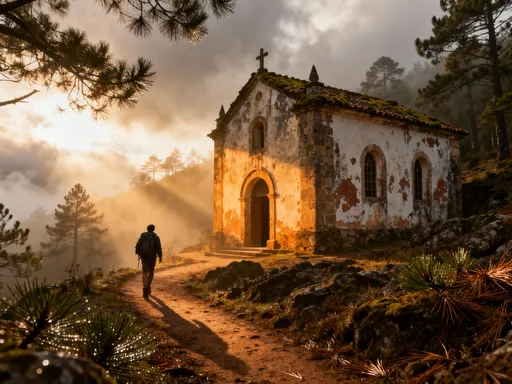
Then, just as the path seems to disappear into the trees, the chapel emerges—a vision in white stone and terracotta tile. The Capilla del Rosario is a masterpiece of Mexican Baroque architecture, its facade adorned with intricate stonework depicting floral patterns, cherubs, and religious emblems. What makes this site so extraordinary is its state of preservation. Unlike many historic buildings that have been restored to modern standards, this chapel retains its original textures—the weathered stone, the chipped paint, the uneven steps worn smooth by centuries of footsteps. Visitors are often struck by the silence, broken only by the rustle of leaves and the occasional call of a mountain bird. Inside, the altar glows with gilded woodwork, and sunlight filters through stained glass, casting colored patterns on the stone floor.
Despite its historical and artistic significance, the Capilla del Rosario remains off most tourist itineraries. Part of its charm lies in this sense of discovery. There are no souvenir stands, no guided tours, no crowds. Locals may visit for special feast days, but on most days, the chapel stands in peaceful solitude. This makes the hike feel like a personal pilgrimage rather than a checklist item. Reaching the chapel is not just a physical achievement—it’s an emotional one. You realize that beauty of this kind does not need fanfare; it endures quietly, waiting for those willing to walk a little farther to find it.
The Monastery in the Mist: Ascending to Nuestra Señora de la Soledad
For those seeking a more challenging ascent with panoramic rewards, the hike to the Monasterio de Nuestra Señora de la Soledad on Cerro de la Soledad is unforgettable. The trailhead begins near the village of San Andrés Cholula, where hikers follow a well-marked path that climbs steadily through oak and pine forest. The elevation gain is significant—over 500 meters—but the effort is repaid with breathtaking views of the Puebla Valley. On clear days, the twin volcanoes stand sentinel in the distance, their peaks dusted with snow. As you rise, the city unfolds below, a mosaic of red-tiled roofs and tree-lined avenues.
About halfway up, the trail passes remnants of old stone walls and a small shrine marking a former pilgrimage route. These subtle clues hint at the site’s long spiritual history. By the time you reach the summit, the air is noticeably cooler, and the monastery appears almost ghostly in the morning mist. The Monasterio de la Soledad, dating back to the 16th century, was originally built as a retreat for monks seeking solitude and contemplation. Its architecture is both imposing and serene: a single dome rises above a simple stone structure, flanked by a quiet courtyard and a cloister with arched walkways. The dome, tiled in green and white, catches the light in a way that makes it visible from miles away—a beacon in the highlands.
What makes this site so powerful is the contrast between the rugged climb and the tranquility of the monastery. The physical exertion heightens the sense of arrival, making the silence all the more profound. Visitors are welcome to walk the cloisters, sit in the courtyard, or pause in the small chapel for reflection. There is no admission fee, no schedule—just the invitation to be present. Many hikers describe the experience as meditative, a rare moment of stillness in an otherwise fast-paced world. The monastery does not demand attention; it offers peace. And in that offering, it becomes more than a historical site—it becomes a sanctuary.
Cobblestone Paths and Forgotten Towers: Hiking Through Puebla’s Historic Outskirts
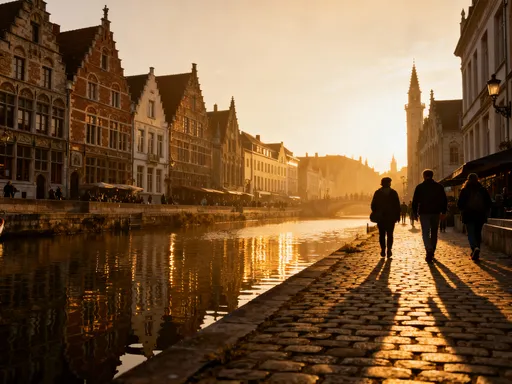
Beyond the well-known trails, Puebla offers a network of ancient colonial roads that connect historic towns like Cholula, Atlixco, and Zacatlán. These routes, once used by traders, pilgrims, and messengers, are now ideal for long, scenic hikes that unfold like chapters in a living history book. Walking these paths is like stepping into a different era—where stone bridges cross seasonal streams, and bell towers rise above village rooftops like landmarks on a forgotten map. The cobblestone surfaces, though uneven in places, speak to centuries of foot traffic and careful craftsmanship. Each village along the way has its own architectural signature, from the pink cantera stone of Atlixco’s churches to the Talavera-tiled fountains found in small plazas.
One particularly enchanting route runs from Cholula to the town of San Pedro Yecapixtla, following an old aqueduct path that once carried water to the city. Along the way, hikers pass the remains of stone arches, some still standing, others reduced to fragments covered in ivy. These structures, built in the 17th century, were engineering marvels of their time, designed to withstand earthquakes and seasonal floods. Today, they serve as quiet monuments to ingenuity and endurance. Further along the trail, a small chapel dedicated to San Isidro Labrador sits at a crossroads, its bell tower tilting slightly with age but still ringing on feast days.
What makes these hikes so special is the sense of continuity. Unlike modern roads that erase the past, these historic paths preserve it. You walk where farmers once led their mules, where monks traveled between monasteries, where families made pilgrimages during religious festivals. The architecture you encounter is not isolated—it is part of a living landscape. A tiled fountain still provides water to travelers. A church courtyard hosts children playing on feast days. A stone bench beneath a tree offers rest to a weary walker. These details transform the hike from a recreational activity into a cultural immersion, where every step connects you to generations who walked the same ground.
What to Pack and When to Go: Practical Tips for the Architectural Hiker
To make the most of your hiking experience in Puebla, planning and preparation are essential. The best time to visit is during the dry season, from November to April, when rainfall is minimal and trail conditions are at their safest. During these months, morning fog typically burns off by midday, offering clear views and optimal lighting for photography. While summer months bring lush greenery, they also increase the risk of afternoon thunderstorms, which can make trails slippery and visibility poor. Early morning hikes are recommended, especially in winter, when temperatures at higher elevations can be quite cool.
Proper gear is key to comfort and safety. Sturdy hiking shoes with good ankle support are a must, as many trails feature loose gravel, rocky sections, and uneven cobblestones. A lightweight backpack should include at least two liters of water, especially on longer hikes where natural water sources are not reliable. Sun protection—such as a wide-brimmed hat, sunglasses, and sunscreen—is important, even on cloudy days, due to the high elevation and strong UV exposure. A light jacket or windbreaker is advisable, as temperatures can drop significantly at higher altitudes, particularly in the early morning or late afternoon.
Other essentials include a fully charged mobile phone with offline maps downloaded, a small first-aid kit, and snacks such as energy bars or dried fruit. A camera is highly recommended, as the architectural details—from ornate stone carvings to colorful tilework—are best appreciated through close observation. While most trails are well-marked, it’s wise to carry a printed map or share your itinerary with someone. Avoid hiking alone at dusk or after dark, as some remote areas lack lighting and emergency services may be delayed. Finally, always carry local emergency contacts and know the nearest medical facility. With these precautions, your hike can be both safe and deeply rewarding.
Why This Hike Changes How You See Travel
Hiking through Puebla’s architectural landscapes does more than provide exercise and scenery—it reshapes the way we think about travel itself. In an age of fast itineraries and photo-driven tourism, these trails invite a slower, more intentional form of exploration. Each step becomes a form of engagement, a way of connecting with history, nature, and community. You are not just observing culture—you are moving through it, feeling its textures, hearing its silences, and experiencing its rhythms. This kind of travel fosters a deeper appreciation, not just for beautiful buildings, but for the people and beliefs that shaped them.
There is also a profound sense of discovery that comes from finding beauty in unexpected places. When you round a bend in the trail and see a centuries-old chapel emerging from the mist, or when you rest on a stone bench carved by hands long gone, you feel a connection that transcends time. These moments remind us that travel is not just about destinations—it’s about presence. It’s about being open to surprise, willing to walk a little farther, and ready to see the world with fresh eyes.
Ultimately, hikes like those in Puebla encourage a more meaningful approach to tourism—one rooted in respect, curiosity, and mindfulness. They challenge us to look beyond the obvious landmarks and seek out the quiet corners where history still breathes. This is not tourism as consumption, but as communion. And in that shift, we find not only new places, but a renewed sense of wonder. The trails of Puebla do not just lead to chapels and monasteries—they lead to a deeper understanding of how architecture, landscape, and human spirit are forever intertwined.
Hiking in Puebla isn’t just about reaching a summit—it’s about uncovering stories written in stone, tile, and centuries of tradition. When trails lead not just to views, but to vaulted ceilings and silent courtyards, you realize that every step is part of a larger journey. This is travel that moves your body and your soul. So lace up, look beyond the map, and let Puebla’s mountains guide you to beauty you never expected.