You Won’t Believe What I Found While Food Shopping in Venice
Wandering through Venice’s narrow alleys, I stumbled upon something unexpected—not just gondolas and canals, but a food lover’s paradise hiding in plain sight. Forget generic souvenirs; the real magic is in the markets, where locals shop for aged cheeses, hand-dried pasta, and fresh lagoon seafood. This is shopping with soul, where every bite tells a story. Let me take you where the tourists rarely go—into the heart of Venetian food culture, one market stall at a time.
The Hidden Rhythm of Venetian Markets
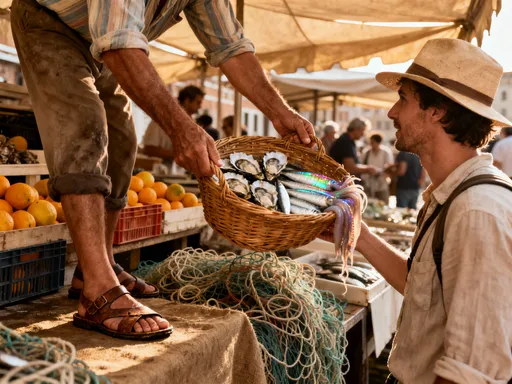
Venice’s markets are not merely places to buy food—they are living, breathing expressions of daily life in a city built on water. At the Rialto Market, one of the oldest in Europe, the morning unfolds like a well-rehearsed symphony. Long before the cruise ship crowds arrive, fishermen in rubber boots haul crates of glistening fish from wooden boats, their catch pulled from the Adriatic just hours before. Vendors arrange mounds of produce with an almost artistic precision: artichokes sorted by shade of purple, radicchio stacked in deep crimson pyramids, and fragrant herbs bundled with twine. The air hums with the scent of sea salt, damp stone, and ripening fruit, while rapid-fire Venetian dialect echoes between stalls.
What makes these markets extraordinary is not just the quality of goods, but the rhythm of human connection they sustain. Unlike the impersonal supermarkets common elsewhere, Venice’s campi markets thrive on familiarity. Shoppers greet vendors by name, exchange news about family or weather, and accept small tastes of cheese or olives as a matter of course. A grandmother in a floral apron might debate the ripeness of peaches with the same vendor she’s known for 30 years. These interactions are not incidental—they are central to the market’s identity. In a city where space is limited and deliveries by boat complicate logistics, trust and personal relationships ensure efficiency and freshness.
The Rialto, in particular, has served as Venice’s commercial heart since the 11th century. Originally a hub for spices, silk, and exotic goods from the East, it now specializes in food, yet still reflects the city’s legacy as a trading empire. The market is divided into two main sections: the pescheria (fish market) under its iconic canopy, and the erberia (produce market) along the Grand Canal. Here, geography dictates availability. There are no vast warehouses or refrigerated trucks—what appears on the stalls each morning depends on what the lagoon and surrounding countryside yielded the day before. Seasonality is not a trend; it is a necessity. In spring, wild asparagus and baby artichokes dominate. Summer brings plump figs and heirloom tomatoes. Autumn is marked by mushrooms and chestnuts, while winter highlights radicchio, black truffles, and salted seafood.
For the observant traveler, the market offers more than ingredients—it offers insight. Watching a fishmonger filet an orata (sea bream) with swift, confident strokes, or seeing a vendor wrap a bundle of herbs in newspaper with practiced ease, reveals a culture that values skill, patience, and care. These are not performances for tourists; they are routines honed over generations. To shop here is to step into a world where food is not a commodity, but a craft, and where the act of buying dinner is interwoven with community, history, and place.
From Water to Table: The Lagoon’s Unique Ingredients
Venice’s cuisine is inseparable from its environment. Nestled in a shallow lagoon where freshwater rivers meet the salty Adriatic, the region produces ingredients found nowhere else. These are not simply local specialties—they are culinary adaptations to a unique ecosystem. The lagoon’s brackish waters foster delicate flavors and rare species that define Venetian cooking. Among the most prized is moeche, soft-shell crabs harvested during their molting season. These translucent, golden-brown crabs are deep-fried whole and served with a squeeze of lemon—a seasonal delicacy so fragile it must be eaten within hours of cooking.
Equally distinctive are sardelle, tiny sardines caught in the lagoon’s narrow channels. Unlike their larger Mediterranean cousins, these finger-length fish are so tender they can be eaten whole, often breaded and fried or layered over polenta. Their flavor carries the mineral tang of the sea, a taste shaped by the tides and salt marshes. Another hallmark is bigołi, a thick, hand-rolled pasta traditionally paired with sardine sauce. The pasta’s rough texture holds the rich, saffron-kissed sauce, creating a dish that is both humble and deeply satisfying. These ingredients are not just regional; they are terroir-driven, their character shaped by Venice’s water, wind, and soil.
At the pescheria, freshness is not a claim—it is a standard enforced by necessity. Fish are displayed on beds of ice, their eyes still bright, gills vivid red. A vendor might hold up a branzino (sea bass) to demonstrate its firmness, or tap a moscardino (baby octopus) to show its springiness. There are no frozen imports or mystery fillets. What you see is what was pulled from the water that morning. This immediacy extends to shellfish as well. Clams, mussels, and razor clams are kept in saltwater tanks, purged and ready for cooking. Shrimp are sorted by size and color, their pink shells glistening under the market lights.
Equally important are the vegetables shaped by the lagoon’s influence. Radicchio di Treviso, grown in nearby fields irrigated with mineral-rich water, is prized for its deep color and balanced bitterness. It is often grilled or braised with apples and balsamic vinegar, its edges caramelizing into sweet, smoky complexity. Another specialty is castraure, a type of artichoke produced by blanching the plant to prevent flowering, resulting in tender, pale hearts. These are typically steamed or fried, their delicate flavor a testament to careful cultivation. Even herbs carry a hint of salinity—wild thyme and marjoram gathered from coastal hillsides add an earthy depth to soups and stews.
The lesson here is clear: Venetian food cannot be replicated elsewhere. You cannot import the taste of the lagoon. The interplay of salt and freshwater, the microclimate, the centuries-old farming and fishing techniques—all contribute to a cuisine that is deeply rooted in place. To understand Venice, one must taste it. And to taste it, one must go to the source: the market, where the lagoon’s bounty is laid bare each morning.
Artisan Shops: Where Craft Meets Craving
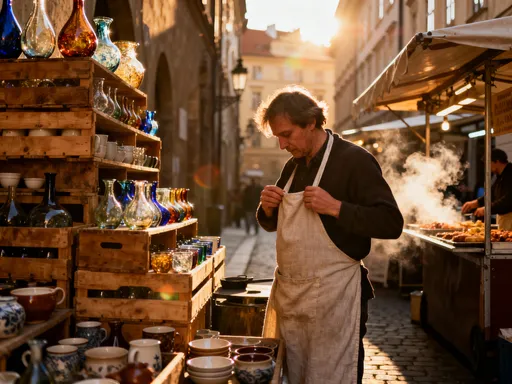
Beyond the open-air markets lie Venice’s hidden culinary sanctuaries—small, family-run shops where tradition is preserved with quiet pride. These botteghe and bacari are not designed for mass appeal. They have no flashy signs or digital menus. Instead, they rely on word of mouth, regular customers, and the unmistakable aroma of something delicious wafting into the alleyway. Step inside one of these shops, and you enter a world where time moves differently, where a wheel of cheese might age for 18 months, and where every product tells a story of origin, skill, and care.
In a narrow calle near Campo Santa Margherita, a cheesemonger carefully unwraps a wedge of montasio, a semi-hard cheese from the Friuli region that has been aged to perfection. The rind is golden and slightly cracked, the interior pale with tiny crystalline specks—evidence of long maturation. “You can taste the mountain air,” he says, offering a sample. The flavor is nutty, with a hint of caramel and a clean finish. He explains that true montasio is made from raw milk and aged in natural cellars, where humidity and temperature fluctuate with the seasons. Mass-produced versions, he notes with a slight frown, lack depth. Here, cheese is not just food—it is heritage.
Down the street, a small enoteca specializes in regional wines from the Veneto. Bottles line the walls like library books, each labeled with the name of a small producer and the year of harvest. The owner, a woman in her sixties with silver-streaked hair, recommends a Refosco from the Colli Euganei—deep red, slightly tannic, perfect with cured meats. “This comes from a family farm,” she says. “They harvest by hand, ferment in oak, and bottle without filtration.” She pours a small taste, and the wine’s complexity unfolds: dark berries, a touch of earth, a whisper of spice. It is not flashy, but honest—a reflection of the land and the people who tend it.
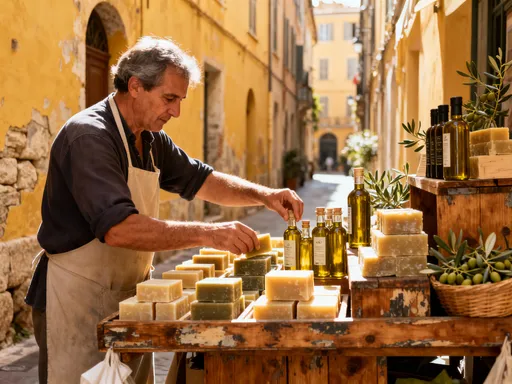
Another shop specializes in olives and condiments. Jars of sun-dried tomatoes, capers from Pantelleria, and hand-dipped olives stuffed with anchovy or herbs line the shelves. A man in a white apron stands behind the counter, dipping olives into a bath of extra virgin olive oil and rosemary. “We do this every morning,” he explains. “The oil absorbs the flavor, and the olives stay tender.” He offers a sample—plump, briny, with a hint of citrus. Nearby, a basket holds small bottles of aged balsamic vinegar from Modena, their labels handwritten in ink. These are not supermarket products; they are crafted in small batches, often by artisans who have inherited recipes from their grandparents.
Then there is the bakery, where the scent of wood smoke and yeast draws people in like a magnet. Inside, a baker pulls a tray of fugazza from a stone oven—Venice’s version of focaccia, topped with olives, onions, and a drizzle of olive oil. The crust is crisp, the interior soft and airy. “We use only natural leavening,” he says. “No shortcuts.” He hands over a warm piece, wrapped in paper. It is simple, yet perfect—a reminder that great food does not require complexity, only care.
What unites these shops is a reverence for craft. The owners are not salespeople; they are stewards of tradition. They take pride in their products, not for profit, but for the sake of doing things right. To shop here is to participate in a culture that values quality over convenience, patience over speed, and connection over transaction.
The Art of the Food Walk: A Local’s Routine
In Venice, food is not an event—it is a rhythm. It is woven into the fabric of daily life, shaping the way people move through the city. Unlike the tourist who plans a meal hours in advance, the Venetian follows an unspoken schedule, guided by hunger, habit, and the availability of fresh goods. This rhythm is most visible in the passeggiata alimentare, the food walk—a morning or early afternoon stroll through the neighborhood to gather ingredients, enjoy a snack, and exchange greetings.
It often begins around 9:30 a.m., when the market stalls are fully stocked and the heat of the day has not yet set in. A woman in a linen dress stops at a polenteria for a paper cone of warm polenta, topped with a spoonful of mushroom ragù. She eats it standing by the canal, watching gondolas glide past. Next, she visits the fishmonger, selecting two small sardine for dinner. “Fresh today?” she asks. “From the lagoon at dawn,” he replies. She nods, satisfied, and places the fish in a cloth bag.
Her route continues to the bakery for a loaf of ciabatta, then to the greengrocer, where she picks up radicchio and a bunch of parsley. At a corner bacaro, she pauses for a small glass of white wine and a cicchetto—a bite-sized snack like marinated anchovies on polenta or a croquette of salt cod. This is not indulgence; it is routine. The spritz comes later, around noon, when friends gather for a light drink and another round of cicchetti. By 1:00 p.m., the food walk is complete. Her basket is full, her appetite briefly satisfied, and her connections to the neighborhood reaffirmed.
What stands out is the zero-waste mindset. Shoppers carry reusable string bags, cloth totes, or wicker baskets. Fish is wrapped in paper, not plastic. Bread comes without packaging. Vendors know their customers’ preferences—“Same as last time?” is a common question. There is little need for labels or branding; trust replaces marketing. This system is not just sustainable—it is deeply social. Every purchase is a conversation. Every transaction strengthens a bond.
For the visitor, adopting this rhythm can transform a trip. Instead of rushing from landmark to landmark, one learns to slow down, to observe, to participate. A morning spent following the local food walk is more revealing than any guidebook. It teaches the seasons, the flavors, the people. It turns shopping into an act of immersion.
What to Buy (and What to Skip) for Authentic Taste
For travelers eager to bring a piece of Venice home, the market offers endless possibilities—but not all choices are equal. The key to authentic shopping lies in knowing what to seek and what to avoid. The most valuable souvenirs are not objects to display, but ingredients to savor.
Seek out cicchetti at neighborhood bacari. These small bites—perhaps a slice of toasted bread with creamy baccalà mantecato, or a skewer of grilled shrimp—are the heart of Venetian aperitivo culture. They reflect the city’s love of simple, high-quality ingredients prepared with care. Many bars prepare them fresh daily, using local seafood and house-made spreads. Eating them in place is ideal, but some shops sell packaged versions or spreads in jars—look for those labeled with the producer’s name and origin.
When buying dry goods, look for DOP (Denominazione di Origine Protetta) or IGP (Indicazione Geografica Protetta) labels. These certifications guarantee authenticity and traceability. A DOP Parmigiano Reggiano, for example, must be aged at least 12 months and produced in specific regions. Similarly, aceto balsamico tradizionale from Modena is aged for 12 or more years in wooden casks—worth the price for its depth and balance.
Small-batch products make excellent keepsakes. Seek out hand-labeled wines from Veneto DOC regions like Soave or Valpolicella. These are often sold in local enoteche and come from family-run vineyards. A saffron risotto blend, made with real zafferano dell’Aquila, is another meaningful purchase—saffron is labor-intensive to harvest, and high-quality threads retain their aroma for months.
On the other hand, avoid pre-packaged “Venetian spice blends” sold near tourist sites. These are often generic mixes with no regional authenticity. Similarly, steer clear of olive oil in Murano glass bottles—while beautiful, the oil inside is usually low-grade and overpriced. Authentic olive oil comes in dark glass or tin, protected from light. If in doubt, ask the vendor: “Is this from Italy? From the region?”
Finally, resist the temptation to buy everything in bulk. Venetian ingredients are best appreciated in small quantities, savored slowly. A single jar of hand-stuffed olives, a wedge of aged cheese, a small bottle of wine—these are more meaningful than a suitcase full of trinkets.
Cooking Like a Local: Turning Purchases into Meals
The true reward of market shopping is not the act of buying, but the act of creating. A meal made from fresh, local ingredients becomes a living souvenir—a taste of Venice recreated in your own kitchen. One of the most authentic dishes to try is bigoli in salsa, a humble yet profound pasta dish that embodies the spirit of the lagoon.
Begin with fresh bigoli, the thick, hand-rolled pasta that holds sauce beautifully. Boil it in salted water until al dente. Meanwhile, slowly caramelize onions in olive oil, then add salted anchovies, allowing them to dissolve into the mixture. The result is a rich, savory sauce with a balance of sweetness and umami. Toss the pasta in the sauce, adding a splash of pasta water to emulsify. Finish with a grind of black pepper. The dish is simple, yet deeply satisfying—a testament to the power of few, perfect ingredients.
Pair it with a radicchio salad. Slice the bitter leaves thinly, toss with olive oil, lemon juice, and a few shavings of aged cheese. The sharpness cuts through the richness of the pasta. For dessert, try frittelle, Venetian fried dough balls. Made with raisins and pine nuts, they are light and crisp, best eaten warm with a dusting of powdered sugar.
The key to success is respecting the ingredients. Use real salted anchovies, not canned fillets in oil. Seek out authentic bigoli, or substitute with fresh whole wheat spaghetti if unavailable. Let the flavors speak for themselves. Cooking this way is not about perfection—it is about connection. Each step recalls the market, the vendor, the taste of Venice.
Why This Kind of Shopping Changes How You Travel
Travel shaped by food is travel transformed. When you shop like a local, you stop being a spectator and become a participant. You learn the rhythm of the city, the names of the seasons, the faces of the people who grow and prepare your food. You slow down. You notice details. You remember.
Contrast this with the fatigue of souvenir hunting—rushing from shop to shop, buying things you don’t need, accumulating clutter instead of memories. A Murano glass paperweight may sit on a shelf for years, barely noticed. But a jar of hand-stuffed olives, a bottle of local wine, a recipe learned from a vendor—these live on. They spark conversations. They inspire meals. They carry emotion.
More than that, food-centered travel fosters respect. It acknowledges that a culture is not just its monuments, but its daily life. It honors the fishermen, farmers, bakers, and cheesemongers who keep traditions alive. It recognizes that the soul of a place is often found not in its grandest piazza, but in its smallest market stall.
So the next time you visit Venice, skip the crowded souvenir stands. Step into the market. Say buongiorno. Ask questions. Taste. Listen. Let the city reveal itself not through postcards, but through polenta, pasta, and a glass of wine shared with a stranger who feels like a friend. Because the most lasting souvenirs are not things you keep—they are flavors you carry home.