You Gotta Taste This: How Nouakchott’s Street Food Stole My Heart
Nouakchott, Mauritania—honestly, I didn’t know what to expect. But the moment I stepped into the bustling morning markets and smelled grilled fish sizzling over charcoal, I knew this city was special. Its food culture isn’t just about flavor—it’s a living story of resilience, tradition, and community. From humble street stalls to family-run maquis, every bite felt authentic, unfiltered, and deeply personal. This is not a destination for curated experiences or luxury dining. It’s a place where food speaks in bold spices, shared platters, and the quiet pride of generations preserving what matters. In Nouakchott, you don’t just eat—you connect.
First Impressions: Arriving in Nouakchott with Zero Expectations
Stepping off the plane in Nouakchott, one is immediately met with a landscape that defies postcard expectations. There are no towering monuments, no neon signs, no tourist information booths. Instead, the city unfolds in low-rise buildings painted in sun-bleached hues, surrounded by vast stretches of Saharan dust. The air is warm and dry, carrying the faint scent of salt from the nearby Atlantic. At first glance, it may seem unremarkable—perhaps even austere. But this simplicity is deceptive. What Nouakchott lacks in polished attractions, it more than compensates for in raw, unfiltered humanity. For travelers accustomed to structured itineraries and guidebook highlights, this city demands a different approach: one rooted in openness, patience, and sensory curiosity.
The absence of tourist infrastructure, often seen as a drawback, becomes an unexpected advantage for those seeking authenticity. Without the filter of commercialized experiences, visitors gain access to daily life as it truly unfolds. Nowhere is this more evident than in the city’s food culture. There are no themed restaurants catering to foreign palates, no fusion experiments designed for Instagram. What you find instead are real meals, prepared by real people, for real hunger. The rhythm of life here revolves around food—not as entertainment, but as sustenance, ritual, and connection. Breakfast is not a café latte and croissant, but steaming cups of sweet mint tea and warm pain complet broken among friends. Lunch is a shared pot of thieboudienne, eaten from a single platter with the right hand. Dinner might be a simple skewer of grilled fish bought from a roadside vendor who has been cooking the same way for thirty years.
This lack of pretense allows travelers to engage with culture on its own terms. There is no performance for outsiders—only life as it is lived. And in that honesty lies a profound kind of beauty. To walk through the streets of Nouakchott is to witness a city that does not perform for visitors but simply exists, proudly and unapologetically. The food, in all its unvarnished glory, becomes the most honest entry point into this world. It invites not observation, but participation. And once you accept that invitation, the city begins to reveal itself, one meal at a time.
The Heartbeat of the City: Morning Markets and Fresh Seafood
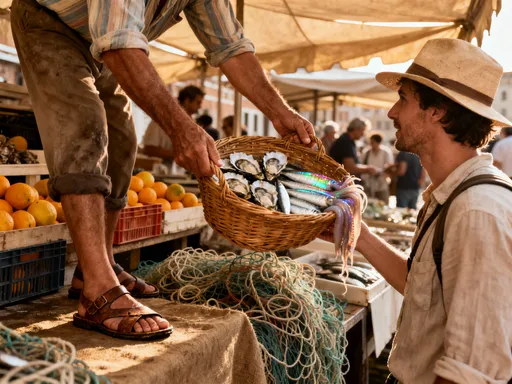
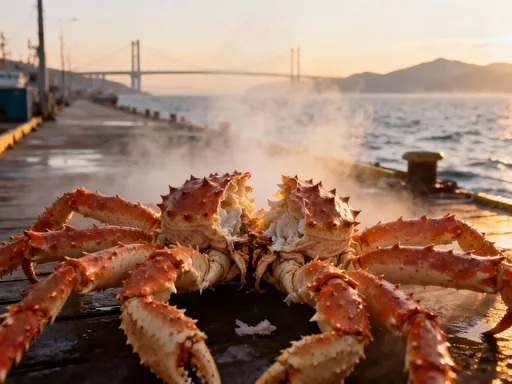
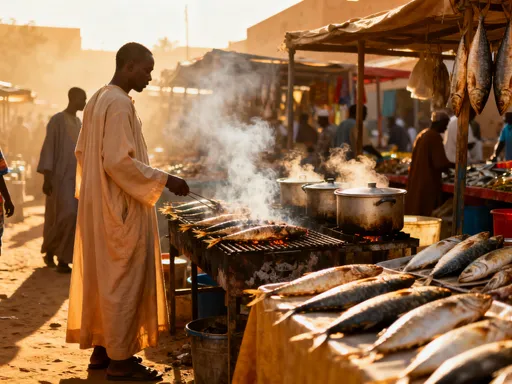
If there is a pulse in Nouakchott, it beats strongest in the early hours at the fish markets. Long before the sun climbs high, fishermen return from the Atlantic with their nightly catch—gleaming tuna, silvery kingfish, and robust grouper pulled fresh from cold currents. The market comes alive with energy: wooden carts creak under the weight of ice-packed trays, vendors shout prices in rapid-fire Arabic and Pulaar, and the sharp tang of saltwater mingles with the smoky aroma of charcoal grills. This is not a staged spectacle for tourists; it is a vital economic and cultural hub where families rely on the day’s haul for income and nourishment.
Seafood is the cornerstone of Mauritanian cuisine, and nowhere is that more evident than in chakk, a richly spiced fish stew that varies slightly from household to household but always features onions, tomatoes, garlic, and a fiery blend of local spices. The dish begins with the freshest possible fish—often still glistening with seawater—and slow-cooks for hours until the flavors meld into a deep, savory broth. What sets chakk apart is not complexity, but intensity. There are no exotic ingredients, no elaborate techniques—just time, care, and an understanding of how to extract maximum flavor from minimal components. It is a cuisine shaped by necessity, refined by tradition.
For visitors, the fish market offers more than just culinary insight—it provides a lesson in food integrity. In many parts of the world, freshness is marketed as a premium feature, something to be highlighted on menus and priced accordingly. In Nouakchott, it is simply the baseline. A fish sold at noon was likely swimming at dawn. There is no need for certification labels or traceability apps; the proof is in the glistening eyes and firm flesh. This immediacy between ocean and plate creates a relationship with food that feels almost sacred. To eat here is to participate in a cycle as old as coastal life itself—catch, cook, share, repeat. And in doing so, one gains a deeper appreciation not only for the meal but for the people who make it possible.
Street Food Culture: Eating Like a Local, One Bite at a Time
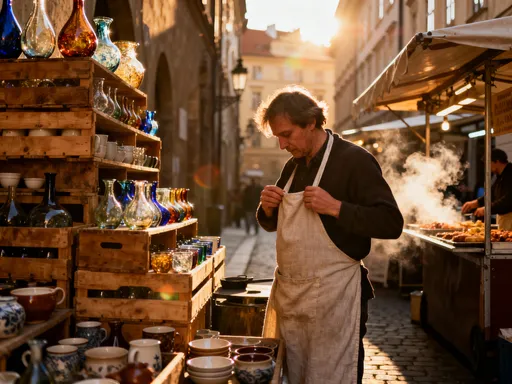
The streets of Nouakchott are lined with small stalls and carts that serve as the city’s informal dining rooms. These are not fast-food outposts in the Western sense, but carefully tended operations run by individuals who take pride in their craft. Among the most beloved offerings are boulettes, spiced meatballs made from finely ground beef or lamb, mixed with parsley, garlic, and cumin, then deep-fried until crisp on the outside and tender within. Served with a side of spicy tomato sauce or tucked into a piece of pain complet, they make for a satisfying, portable meal at any hour.
Equally popular are brochettes, skewers of marinated meat grilled over open flame. Whether it’s chicken, beef, or lamb, the meat is often rubbed with a blend of salt, pepper, and djenkhet—a potent chili paste that delivers both heat and depth. The grills sizzle constantly, sending plumes of aromatic smoke into the air, drawing in office workers, taxi drivers, and passersby alike. The best stalls develop loyal followings, recognizable not by signage but by the steady queue of locals who know quality when they see it.
Hygiene, a common concern for travelers, is generally well managed at reputable spots. Many vendors use gloves or tongs, keep sauces covered, and wash hands frequently. Observing where locals eat is often the best indicator of safety—crowds mean turnover, and turnover means freshness. Building a small rapport with a regular vendor can also enhance the experience. A smile, a simple greeting in Arabic or French, and a willingness to follow local customs—like using only the right hand when accepting food—can go a long way. Over time, these interactions transform from transactions into moments of connection. The food remains central, but the human exchange elevates it.
For those planning to explore Nouakchott’s street food scene, timing matters. Mornings bring fresh bread and tea; midday is ideal for grilled meats and stews; evenings see a resurgence of activity as families and friends gather around shared platters. Stalls near markets, transportation hubs, and mosques tend to be reliable, as they cater to consistent foot traffic. While mobile apps and online reviews are scarce, word-of-mouth recommendations from hotel staff or local guides can lead to hidden gems. The key is to approach with respect, patience, and an open stomach.
Maquis and Hidden Eateries: Beyond the Sidewalks
Beyond the street stalls lie the maquis—small, family-run restaurants that form the backbone of Nouakchott’s dining culture. Often tucked into residential neighborhoods or set back from main roads, these modest establishments serve traditional meals in a communal setting. Unlike formal restaurants, maquis are not designed for privacy or luxury. Tables are simple, seating is shared, and the atmosphere is warm and unpretentious. What they lack in decor, they make up for in authenticity and flavor.
The centerpiece of most maquis menus is thieboudienne, widely considered the national dish of Mauritania. This hearty preparation features fish—often red snapper or grouper—simmered in a tomato-based sauce with onions, garlic, and a blend of spices, then served over a mound of buttery rice layered with carrots, cabbage, and sometimes eggplant. The dish is typically presented on a large platter, meant to be shared among two or more people. Diners eat with their hands, using the right hand to scoop rice and fish together in each bite. This act of communal eating reinforces social bonds and reflects the collective spirit of Mauritanian culture.
Maquis are more than just places to eat—they are spaces of connection. Families gather after prayers, friends reunite after weeks apart, and travelers who take the time to visit are often welcomed with curiosity and kindness. Owners may offer mint tea before the meal, a gesture of hospitality deeply embedded in local tradition. The pace is slow, the conversation easy. There is no pressure to turn over tables or order extras. A meal here can last hours, unfolding naturally like a long afternoon visit with relatives.
Finding a reliable maquis requires a shift in mindset. Rather than relying on digital reviews or maps, travelers are encouraged to seek recommendations from locals—hotel staff, taxi drivers, or shopkeepers. A simple question in broken French or Arabic can lead to an invitation or a pointed finger toward a hidden spot down a quiet alley. These places rarely advertise, yet they thrive on loyalty and reputation. To eat at a maquis is to be let in on a quiet secret: that the best food is often found where no one is trying to impress.
Flavors of Tradition: Understanding Mauritanian Ingredients and Spices
Mauritanian cuisine is defined by restraint. The ingredient lists are short, the techniques straightforward, yet the results are deeply flavorful and satisfying. This is not a cuisine of excess, but of intention. Staples like millet, couscous, and rice form the foundation of most meals, providing sustenance in a climate where resources can be scarce. Proteins—usually fish or modest cuts of meat—are used thoughtfully, never wasted. Vegetables like carrots, tomatoes, and cabbage are cooked slowly to draw out sweetness and texture. Every element has a purpose.
Spices are used with precision rather than abundance. Fenugreek, cumin, coriander, and black pepper appear regularly, but the true hallmark of Mauritanian flavor is djenkhet, a fermented chili paste that delivers a slow-building heat and complex umami depth. Made from dried chilies, garlic, and salt, it is often prepared at home and passed down through generations. A small spoonful can transform a simple stew into something memorable. Dried limes, another distinctive ingredient, are sometimes added to fish dishes, lending a citrusy bitterness that cuts through richness.
The culinary traditions of Mauritania reflect a blend of influences—Arab, Berber, and West African—all shaped by centuries of trade, migration, and adaptation. Arab traders brought spices and rice cultivation; Berber herders contributed dairy and grain-based dishes; West African communities introduced techniques for stewing and fermenting. The result is a cuisine that is both regional and deeply personal. While certain dishes like thieboudienne or lakh (a millet porridge) are widely recognized, no two versions are exactly alike. Each family has its own variation, its own secret touch—extra garlic, a pinch of cinnamon, a longer simmer.
Home cooking remains central to daily life. Even in urban areas, many families prepare meals from scratch, often beginning early in the morning. Meals are typically eaten at home in the evening, with extended family gathered around a single dish. The act of cooking is not rushed; it is a form of care. And the act of eating is not solitary; it is a shared ritual. For travelers, understanding these rhythms offers insight into the values that shape Mauritanian society: patience, generosity, and respect for tradition.
Practical Tips for Food-Centric Travelers in Nouakchott
Traveling through Nouakchott as a food lover requires preparation, not just of appetite, but of awareness. The city’s culinary rewards are abundant, but they come with certain practical considerations. First and foremost is hydration. The climate is hot and dry for much of the year, and dehydration can set in quickly, especially when consuming spicy foods. Drinking plenty of bottled water throughout the day is essential. It is also wise to carry hand sanitizer and use it before eating, particularly when consuming food with the hands.
Food safety is generally well managed, but certain precautions are advisable. Avoid unrefrigerated dairy products, which can spoil quickly in the heat. Ensure that meats are thoroughly cooked—opt for grilled or stewed dishes over raw or undercooked preparations. Stick to bottled or filtered water, and avoid ice unless it is confirmed to be made from purified sources. While street food is safe at reputable stalls, it is best to eat at places with high turnover, where ingredients are fresh and constantly replenished.
Understanding a few basic phrases in French or Arabic can greatly enhance the experience. Simple greetings like "Salam alaikum" (peace be upon you) or "Bonjour" go a long way in building rapport. Knowing how to say "Un brochette, s’il vous plaît" or "Merci" shows respect and often earns a warmer response. When eating in a maquis or someone’s home, remember to use only the right hand for eating, as the left is traditionally considered unclean.
Timing also plays a role in food safety and enjoyment. Markets are best visited in the morning, when fish and produce are at their freshest. Lunchtime offers the widest selection of hot dishes, while evenings are ideal for slower, more social meals. Avoid eating roadside food during the hottest part of the day, when temperatures can compromise food quality. Finally, carry small bills, as most vendors do not accept cards and may not have change for large notes. With these tips in mind, travelers can navigate Nouakchott’s food scene with confidence and respect.
Why Food in Nouakchott Changes the Way You See Travel
Travel is often sold as a series of sights: monuments, landscapes, photo opportunities. But in Nouakchott, the most profound experiences are not seen—they are tasted, smelled, shared. To eat here is to step outside the role of observer and become a participant. It is to sit on a low stool beside a fisherman on his break, to accept a cup of tea from a vendor who remembers your face, to struggle with the right hand technique and laugh when rice falls onto the table. These moments do not fit neatly into travel brochures, but they linger far longer than any snapshot.
Nouakchott challenges the notion that comfort equals value. There are no five-star restaurants, no climate-controlled dining rooms, no menus in multiple languages. What exists instead is honesty—food made with care, served with pride, shared without pretense. In a world where so many destinations are polished to appeal to tourists, Nouakchott remains refreshingly unapologetic. It does not change for visitors. It asks only that they come with open minds and respectful hearts.
Engaging with the city’s food culture fosters a deeper kind of connection—one that transcends language and custom. It reveals the universal language of hospitality, the quiet dignity of daily labor, and the joy found in simple things: a well-cooked meal, a shared smile, a moment of stillness in a busy day. For women in their thirties to fifties—many of whom manage households, raise families, and understand the power of a home-cooked meal—this kind of travel resonates on a personal level. It speaks to the values they know well: care, generosity, and the importance of gathering around the table.
In the end, Nouakchott does not offer escape. It offers clarity. It reminds us that travel is not about collecting destinations, but about deepening understanding. It teaches that the most meaningful encounters are often the simplest—the smell of grilled fish at dawn, the warmth of tea offered without expectation, the taste of a stew made with generations of knowledge. These are not just flavors. They are stories. And once you’ve tasted them, you carry them with you—long after the journey ends.