You Won’t Believe What I Saw Driving Through Yangon’s Forgotten Streets
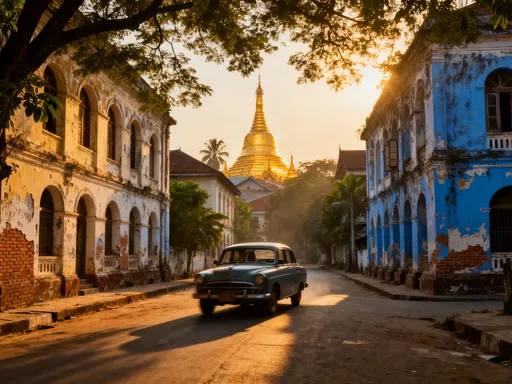
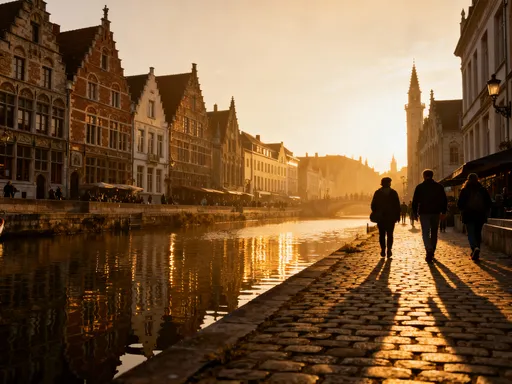
Driving through Yangon, I was blown away by how colonial-era buildings stand side by side with golden pagodas. The city’s architecture tells a story of layers—British design, traditional Burmese touches, and modern life crashing together. You can feel the history in the cracked walls and carved teak. This isn’t just sightseeing—it’s like driving through a living museum. And honestly? I didn’t expect to be this moved by old concrete and weathered wood.
Why Self-Driving in Yangon Changes Everything
Exploring Yangon behind the wheel transforms the travel experience from passive observation to active discovery. Unlike guided tours that follow fixed itineraries and rush through checklists, driving allows travelers to pause whenever something catches the eye—a crumbling doorway, a flash of turquoise paint on a shutter, or a sudden glimpse of a temple dome through a gap in the trees. This freedom to stop, observe, and absorb is what makes self-driving uniquely powerful in a city like Yangon, where beauty often hides in overlooked details. There’s a rhythm to the city that only becomes apparent when you’re navigating its streets at your own pace, free from the constraints of group schedules.
Foreign visitors can legally rent cars in Yangon, provided they obtain the necessary permits and, ideally, hire a local driver familiar with the city’s chaotic traffic patterns. While international driving licenses are recognized, road conditions, signage inconsistencies, and aggressive driving styles mean that most tourists opt for rental agencies that provide both vehicle and driver. These services are widely available through reputable travel agencies and hotels, ensuring compliance with local regulations while maximizing comfort and safety. Many travelers find that working with a knowledgeable driver offers the best of both worlds: the flexibility of independent travel combined with local insight.
One of the most underrated tools for navigating Yangon is a local SIM card. With reliable data from providers such as MPT or Telenor, travelers can use Google Maps effectively, even in areas with spotty connectivity. Offline maps can be downloaded in advance, and GPS tracking remains accurate enough to guide drivers through the city’s labyrinthine streets. Real-time traffic updates help avoid bottlenecks, especially during morning and evening rush hours when major arteries like Bogyoke Aung San Road and Pyay Road become congested. A simple mobile setup turns an ordinary drive into a smoothly coordinated exploration.
The real advantage of self-driving lies in access to hidden corners that most tours skip. While guided groups flock to Shwedagon Pagoda or the National Museum, a driver willing to veer off the beaten path can uncover forgotten alleys lined with decaying colonial facades, quiet residential lanes shaded by banyan trees, or markets tucked beneath elevated train tracks. These moments of serendipity—seeing laundry fluttering from a wrought-iron balcony or children playing beside a century-old post office—are what give depth to a journey. Driving doesn’t just get you from point A to B; it opens up the in-between spaces where Yangon’s soul truly resides.
The Colonial Core: Where Time Stands Still
Downtown Yangon is a treasure trove of British colonial architecture, a legacy of the city’s role as the capital of British Burma from the mid-19th century until independence in 1948. Walking or driving through this area feels like stepping into a different era, where grand edifices with arched windows, columned verandas, and stuccoed facades rise above bustling sidewalks. Many of these buildings, though weathered by decades of tropical humidity and monsoon rains, remain in active use—housing government offices, banks, law firms, and small businesses. Their survival is a testament to both structural resilience and cultural continuity, even as the city around them evolves.
One of the most iconic structures is the former Secretariat Building, once the administrative heart of colonial governance. Located near Maha Bandula Park, this sprawling complex features a blend of neoclassical and Indo-Saracenic design elements, including domed corner pavilions and intricately carved stone trim. After years of neglect, parts of the building have been restored and opened to the public as a museum and cultural center. Driving past its grand entrance offers a powerful visual reminder of Yangon’s historical significance, with sunlight catching the restored stonework and casting long shadows across the courtyard.
Another landmark is the Strand Hotel, a name synonymous with colonial-era luxury in Southeast Asia. Opened in 1901, the hotel’s facade remains largely unchanged—ivory-colored walls, wooden shutters, and a wide veranda supported by masonry columns. Even if you’re not staying overnight, a slow drive along Strand Road allows you to appreciate its presence amid the surrounding urban fabric. The contrast between the hotel’s preserved elegance and the more utilitarian buildings nearby highlights how selectively preservation efforts have been applied across the city.
What sets Yangon’s colonial architecture apart is its hybrid character. Rather than being purely European imports, these buildings often incorporate regional adaptations—high ceilings for ventilation, deep overhangs to shield against rain, and locally sourced materials like teak and brick. Indian laborers and Burmese artisans contributed to their construction, leaving subtle cultural imprints in decorative details and craftsmanship. This fusion creates a distinct Rangoon style—one that reflects not just imperial ambition but also local ingenuity and climate-responsive design. Recognizing these nuances transforms a simple drive into a lesson in architectural history.
Pagodas Meet Modernity: The Spiritual Skyline
No view of Yangon is complete without the shimmering presence of the Shwedagon Pagoda, its gilded stupa visible from nearly every corner of the city. Rising over 98 meters above Singuttara Hill, this sacred site dominates the skyline, a beacon of faith that has stood for centuries. From the road, the pagoda appears almost surreal—its gold-plated form glowing against the sky, surrounded by a mix of modern high-rises, mid-rise apartments, and low-lying traditional homes. The juxtaposition is striking: a timeless spiritual center encircled by the relentless march of urban development.
Modern architecture in Yangon often attempts to echo traditional Buddhist forms, though with varying degrees of success. Some newer buildings incorporate tiered roofs reminiscent of temple eaves, while others feature dome shapes inspired by stupas. However, these references can feel superficial when executed without sensitivity to scale or context. Driving through neighborhoods like Kamayut or Bahan, you’ll notice apartment complexes with gold-tipped spires or lotus-shaped decorations that seem more decorative than meaningful. These attempts at cultural homage reveal a desire to maintain aesthetic continuity, even as construction materials and lifestyles shift toward contemporary norms.
Yet beyond the grandeur of Shwedagon, countless smaller pagodas dot the cityscape, often blending seamlessly into everyday life. These neighborhood shrines may occupy a corner lot beside a noodle shop, sit quietly behind a schoolyard, or glow softly at dusk with strings of lanterns. Their presence is not theatrical but habitual—a constant, reassuring reminder of the role of faith in daily routines. Driving past one at twilight, with incense smoke curling into the air and devotees kneeling before small altars, offers a moment of stillness amid the city’s motion.
The spiritual rhythm of Yangon becomes especially apparent when viewed in motion. As the car moves through different districts, the recurrence of pagodas—some ancient, some newly built—creates a visual cadence. They serve not only as places of worship but also as orientation points, landmarks that help residents and visitors alike navigate the city. This integration of the sacred into the secular fabric is rare in modern urban environments, where religious sites are often segregated or hidden away. In Yangon, spirituality is not confined to temples; it flows through the streets, visible in every corner where devotion meets daily life.
Residential Gems: The Quiet Beauty of Yangon’s Neighborhoods
Just beyond the bustling core of Yangon lie residential neighborhoods that offer a quieter, more intimate portrait of the city’s architectural heritage. Areas like Bahan, Kamayut, and Mayangon are home to tree-lined avenues shaded by rain trees and frangipani, where 1930s bungalows and colonial-era villas stand behind iron gates and flowering hedges. These homes, though often privately owned and not open to the public, reveal their charm through glimpses from the street—tile roofs, latticework windows, and verandas supported by ornate pillars. Driving through these zones feels like moving through a living archive of early 20th-century domestic design.
The architectural style of these homes reflects a blend of Art Deco influences and traditional Burmese craftsmanship. Clean geometric lines and stepped facades nod to 1930s modernism, while materials like teak wood and carved fretwork connect them to local building traditions. High ceilings and cross-ventilation were practical responses to Yangon’s hot, humid climate, allowing air to circulate naturally before the era of air conditioning. Even today, many of these homes remain cool and airy, a testament to intelligent, climate-responsive design that modern construction often overlooks.
What makes these neighborhoods particularly special is their sense of continuity. Unlike cities where historic districts are preserved as tourist attractions, Yangon’s residential areas are fully lived-in. Children ride bicycles along the sidewalks, elders sit on benches in the late afternoon, and gardeners tend to marigolds and jasmine. There’s no museum-like sterility here—just ordinary life unfolding within extraordinary surroundings. Respecting privacy is essential; these are not photo opportunities but real homes. But simply driving slowly through these streets allows travelers to absorb the atmosphere, appreciating how history and modernity coexist in harmony.
For those interested in architecture or urban design, these neighborhoods offer a masterclass in sustainable living. The integration of green space, natural ventilation, and durable materials creates an environment that is both beautiful and functional. Moreover, the scale of development—low-rise, human-scaled buildings set back from the road—contributes to a sense of calm that is increasingly rare in fast-growing Asian cities. A drive through Bahan in the early morning, when the light filters through the canopy and the air is still fresh, is an experience of quiet beauty that lingers long after the journey ends.
Contrasts in Concrete: Soviet-Style Blocks and Market Halls
While Yangon is often celebrated for its colonial and religious architecture, another layer of its built environment tells a different story—one of pragmatism, ideology, and adaptation. From the mid-20th century onward, especially during periods of socialist governance, the city saw the construction of functional, utilitarian buildings designed for efficiency rather than aesthetics. These structures, often made of raw concrete with minimal ornamentation, reflect a shift in priorities from grandeur to utility. Though they may lack the visual appeal of older buildings, they contribute to Yangon’s architectural diversity and reveal how political and economic forces shape the urban landscape.
One notable example is the People’s Square and People’s Park complex, which includes government offices and public gathering spaces built during the 1970s and 1980s. The architecture here is stark—rectangular forms, flat roofs, and repetitive window patterns—characteristic of socialist-era design seen across Eastern Europe and parts of Asia. Yet even these buildings have developed character over time. Weathering has softened their edges, vines climb their walls, and colorful signage added by tenants brings life to otherwise monotonous facades. Driving past them, one begins to appreciate how people adapt to and personalize even the most austere environments.
Similarly, municipal market halls and housing blocks built during this period serve essential roles in daily life. Though their exteriors may appear drab, their interiors buzz with activity—vendors selling produce, tailors working at sewing machines, families gathering in shared courtyards. These spaces, while architecturally modest, are vital to the city’s social and economic fabric. Street vendors often set up beneath their overhangs, turning blank walls into vibrant hubs of commerce. This organic transformation demonstrates the resilience of urban life, where function ultimately shapes form, regardless of original intent.
What’s striking is how these concrete structures coexist with older and newer buildings, creating a patchwork skyline. A 1930s villa might sit next to a 1970s apartment block, which in turn faces a modern shopping center. This layering is not always harmonious, but it is honest—a reflection of Yangon’s complex history and evolving identity. For travelers, recognizing these contrasts adds depth to the journey, offering insight into how cities evolve not through single visions but through waves of influence, necessity, and renewal.
How to Plan Your Own Architectural Road Trip
Turning inspiration into action requires thoughtful planning, especially in a city like Yangon where infrastructure and navigation can be unpredictable. The first step is securing transportation. While renting a car independently is possible, most visitors find it more practical to book a vehicle with a driver through a licensed agency. Companies such as Yangon Guide Services and Myanmar Travel Hub offer transparent pricing, well-maintained vehicles, and experienced drivers who know the city’s routes and shortcuts. This arrangement eliminates the stress of navigation while allowing flexibility in itinerary.
Navigation tools are essential. Google Maps works reliably in Yangon, especially when paired with a local SIM card for continuous data. For areas with poor signal, downloading offline maps in advance ensures you won’t lose your way. Google Earth can also be used before the trip to scout routes and identify points of interest visually. Combining these tools allows for efficient route planning—such as designing a loop that begins downtown, moves through colonial landmarks, then transitions into residential neighborhoods and ends at Shwedagon for sunset.
Timing matters. Early mornings are ideal for driving, offering cooler temperatures, softer light for photography, and lighter traffic. By 9 a.m., the city heats up and congestion increases, particularly around business districts. Late afternoons can be productive for visiting pagodas, as lighting improves and crowds thin out. Avoiding rush hours not only makes the drive more pleasant but also allows for unhurried stops at points of interest.
Safety and respect should guide every decision. Stick to main roads at night, as side streets may lack lighting or clear signage. Always observe no-entry signs, especially near government buildings or private residences. Carry bottled water, sunscreen, and a basic first-aid kit, as roadside amenities are limited. Most importantly, approach neighborhoods with humility—these are living communities, not open-air museums. Quiet observation from the road is far more respectful than intrusive photography or trespassing.
Beyond the Frame: Why These Buildings Matter
Yangon’s architecture is more than a collection of old buildings—it is a living record of resilience, adaptation, and identity. These structures have witnessed empires rise and fall, survived natural decay and political upheaval, and continued to serve their communities through generations. Preserving them is not about freezing the city in time, but about honoring the continuity of life within historic spaces. Each cracked column, repurposed office, and family-run shop within a colonial building tells a story of endurance and reinvention.
Self-driving amplifies this connection by allowing travelers to engage with the city on a deeper level. Instead of viewing landmarks through a tour bus window, you experience them in context—seeing how people interact with spaces, how light changes across facades throughout the day, and how different architectural styles coexist in close proximity. This immersive perspective fosters a greater appreciation for Yangon not as a static destination, but as a dynamic, evolving entity shaped by history and humanity.
In a world where global cities increasingly resemble one another—dominated by glass towers and chain stores—Yangon stands apart. Its architectural diversity resists homogenization, offering a rare glimpse into a place where past and present are not in conflict but in conversation. To drive through its streets is to listen to that dialogue, to witness how a city carries its history without being burdened by it.
Every traveler has a choice: to follow the crowd or to take the wheel. Choosing independence means embracing uncertainty, discovering the unexpected, and forming a personal connection with a place. In Yangon, that connection is waiting in the quiet corners, the weathered walls, and the golden spires that rise above it all. The road is open. All you need to do is start the engine.
Yangon’s streets are more than roads—they’re pathways through time. From colonial facades to sacred spires, every turn reveals a layer of identity. Driving yourself doesn’t just offer access—it offers awareness. And in a world of cookie-cutter cities, that kind of connection is rare. So grab the map, hit the road, and let the architecture speak. You might just hear the city’s soul.